Benefits of Hearing Aid Assistive Devices

Ealing Hearing Centre • April 21, 2023

While hearing aids are largely for improving one’s ability to hear, there are tons more benefits that extend beyond that. These devices aren’t just about hearing. They’re about improving the quality of life and how you spend it, whether enjoying music and television or spending time with family. Read on to discover the ways that hearing aids can improve not just your hearing but the way you enjoy your surroundings and even improve your relationships. These are things that even those that aren’t hard of hearing would love to have.


Increase Awareness


With a hearing aid, you can be more aware of your surroundings. This awareness is important, as it could save you from harm or accident. Beyond that, hearing aids can help you be more alert in general, more present and in the moment. With hearing aids, surprises are less likely to sneak up on you.


Connect to Television and Streaming


This one should be especially exciting for those who enjoy digital entertainment, such as music, streaming, or even video games. Modern hearing aids can connect directly to your phone, computer, or television via Bluetooth. So even if you’re in a household full of noisy children or chatty adults, you can tune them out and keep enjoying your favourite shows.


Direct Volume Control


If there’s any advantage that those with impaired hearing have over those that don’t, it’s volume control. Hearing aids give you direct control over incoming sounds and how soft or loud they are. If someone is speaking too quietly, you can crank up the volume to hear them better. Or if there’s some loud noise in your vicinity, like construction work, simply turn it down until it passes. And with modern devices, it’s easier than ever. Because hearing aids can connect directly to your phone or another device through an app, you can access volume sliders that give you direct control.


Clearer Calls


We all want to connect with our loved ones, and the most convenient way to do that is through phone or video calls, especially if they're far away. As mentioned before, modern hearing aids can easily link with your phone, connecting your ears directly to the lips of your family and friends. It’ll be as though they’re right there in the room with you.


Hold Conversations with Family


Communication is important—especially with friends and family. When you’re not tuning them out to enjoy some television, your hearing aid can improve the way you communicate with your closest loved ones or anyone else, including those that you've hired to provide service. Hearing aids eliminate the need to ask someone to repeat themselves or write down what they’re saying. With hearing aids, you can hold a conversation and never worry about misinterpreting someone.
 

Get in touch with Sid, Sukhina and the team today!

By Aarti Raicha December 20, 2025
Blocked ears are rarely dramatic at first, and for many adults the sensation builds gradually, with a feeling of fullness, mild muffling, or pressure that comes and goes, often becoming more noticeable in quiet rooms or during conversations where speech suddenly feels less clear than it used to. When this happens, the natural instinct is to “unblock” the ear as quickly as possible. People search for ways to clear wax, assuming it is a simple obstruction that needs to be removed. In practice, ear wax blockage is more complex than it appears, and many attempts to unblock it at home end up making the problem harder to resolve. Why Ear Wax Builds Up in Adults Ear wax is a normal and necessary part of ear health. It protects the ear canal, traps dust and debris, and helps prevent infection. In most people, wax gradually moves out of the ear on its own as the jaw moves during talking and chewing. In adults, however, this process does not always work as smoothly. Wax can become drier with age, ear canals can narrow slightly, and the natural movement that helps wax migrate outward may slow. Hearing aid use, earbud use, and repeated attempts to clean the ears can also interfere with this self-cleaning process. Over time, wax that would normally exit the ear can compact deeper inside the canal, leading to blockage. Misunderstanding Blocked Ears Many people think of blocked ears as similar to a blocked nose, something that can be cleared quickly with the right technique. This comparison is misleading. Ear wax does not dissolve easily, and once it has compacted, it often behaves more like a plug than a soft build-up. Attempts to flush it out, soften it too aggressively, or remove it manually can push it further in rather than clearing it. This is why people often report that their ears feel worse after trying to unblock them themselves, even though they intended to fix the problem. Common Home Methods
By Aarti Raicha November 28, 2025
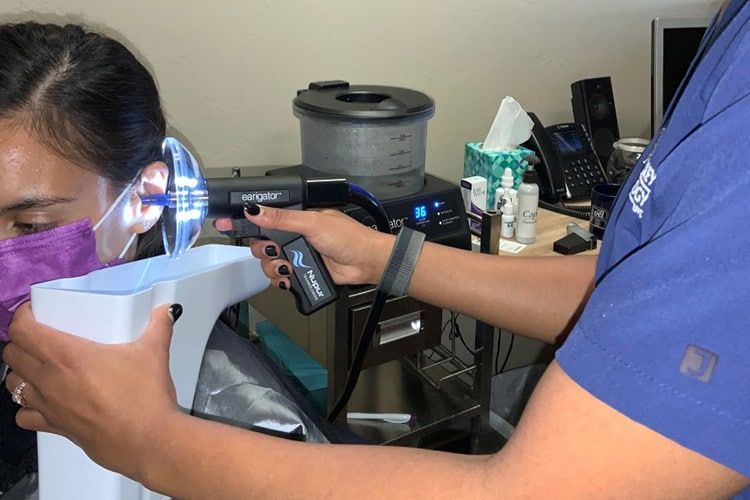
People, you probably just see earwax as something to remove. But its role is crucial: it’s your ear’s natural defence system against foreign particles and bacteria. The problem only happens when this protective barrier eventually dries up and turns into a blockage. Understanding Hardened Earwax Hardened earwax develops when it dries up and becomes firmly lodged, or impacted, inside the ear canal. This impaction isn't just a physical blockage; it can trigger a range of symptoms that severely impact your well-being: A persistent feeling of blocked ears or fullness Tinnitus (a distracting ringing or buzzing) Occasional dizziness or balance issues Noticeable reduction in hearing or muffled hearing . The hardening is often due to factors outside your control, such as age, genetic predisposition, the unique anatomy of your ear canals, or certain past medical events. Gentle Ways to Soften Wax at Home (Exercise Caution) Before seeking professional intervention, you may try softening the wax yourself. However, we must stress that safety and caution are paramount. 1. Medical-Grade Olive Oil Drops Gently warm some medical-grade olive oil (it should feel lukewarm, never hot) and place a few drops in the affected ear. Leave the oil to work for 10–15 minutes, then tilt your head to drain the excess. Repeating this 3–4 times daily for several days can significantly soften the blockage. 2. Over-the-Counter Drops Ask your local chemist for non-prescription drops designed to help break down earwax. If you prefer a ready-made solution, the pharmacist can guide you. The Absolute Rule of Ear Care This is vital: Never insert objects like cotton swabs, hairpins, or rolled-up tissue into your ear canal. These objects do not remove wax; they inevitably push the wax deeper against the eardrum, worsening the impaction and risking serious injury to the delicate inner ear structures. The Experts' Choice: Professional Ear Wax Removal in Ealing When home remedies prove insufficient, or if you are experiencing worrisome symptoms like pain, persistent ringing, or sudden hearing loss, consulting an expert is the safest course of action. Our professional services guarantee safe, accurate, and hygienic removal.
By Aarti Raicha November 21, 2025
Hearing loss is gradual and often worsens with age. Our philosophy, built over 35 years, is that a simple 'one size fits all' approach will inevitably fail when it comes to effective treatment. As expert audiologists, we understand the vital role excellent hearing plays in your daily life. That's why we provide professional, comprehensive hearing tests in Stanmore and the surrounding community. Our tests help us locate the precise cause of your hearing problem, and from there we deliver the right treatment. Which Type of Hearing Test Do You Need? Hearing tests are essential diagnostic tools that allow us to evaluate the specific type of hearing loss you may have: sensorineural , conductive , or mixed . We will detail these types below. The right approach depends entirely on your individual situation. We use our extensive experience to tailor our assessment to ensure the most accurate diagnosis. 1. Pure Tone Audiometry During this foundational test, you will simply relax in a comfortable, sound-treated room. While you listen through the headphones, we'll ask you to signal every time you hear the various tones or speech. Your response will help us fully understand the pattern and severity of your hearing loss. Bone Conduction: We also use a small device called a bone vibrator placed behind your ear. This sends sound vibrations directly to your inner ear, bypassing the eardrum and ear canal. This step allows us to specifically evaluate how well your cochlea (the part of the inner ear that translates sound into electrical signals for the brain) is working. 2. Impedance Testing (Tympanometry)